
Two researchers from the University of Birmingham have been awarded funding through the HI-ACT Secondment Flex Fund. Both will take their research directly into policy and government settings, one working with the Department for Energy Security and Net Zero (DESNZ) and the other with the Parliamentary Office of Science and Technology (POST).
Modelling the value of long-duration hydrogen storage with DESNZ
Dr Harati, Research Fellow, will be seconded to DESNZ to assess the system value of long-duration hydrogen storage for the UK energy transition.
Working with the department’s Energy Engineering team, Saeed will use DESNZ’s SCORES model to compare storage options, including salt caverns, depleted gas fields and lined rock caverns. The aim is to identify which storage characteristics matter most for balancing renewable generation, providing flexibility and strengthening the resilience of the energy system. His findings will feed directly into government modelling and policy thinking on long-duration storage.
Building an evidence pathway to Westminster with POST
Dr Sharma, Postdoctoral Research Fellow, will build on her existing work with POST to create a stronger evidence pathway between HI-ACT and Westminster.
Her secondment will deliver three outputs: a national policy workshop for HI-ACT Early Career Researchers, a knowledge-exchange workshop with POST and parliamentary colleagues, and a HI-ACT Perspectives Paper. Together, these will help ensure that hydrogen and net zero policy is informed by research from across the Hub and give early career researchers practical experience of how evidence reaches decision-makers.
Professor Walker, HI-ACT Principal Investigator, said: “Hydrogen will only play its full role in a net zero energy system if research and policy move forward together. Saeed and Shivangi’s secondments are exactly what the Flex Fund was designed for: putting our researchers alongside the people shaping energy policy, so that evidence from across the Hub reaches government and Parliament directly. I’m delighted to see two early career researchers leading the way, and I’d encourage colleagues and partners across the consortium to think about how a secondment could do the same for their work.”
About the HI-ACT Secondment Flex Fund
HI-ACT Secondment Flex Fund supports skills development and knowledge exchange between academia and industry, the public sector and the third sector, focused on the integration of hydrogen into future energy use.
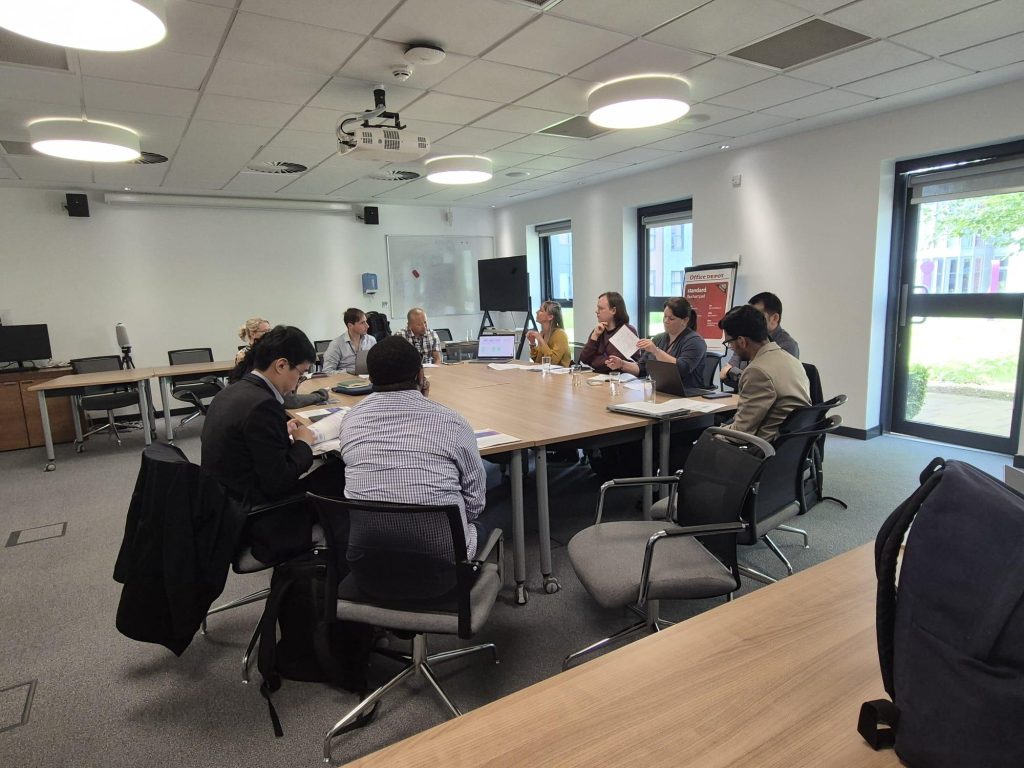
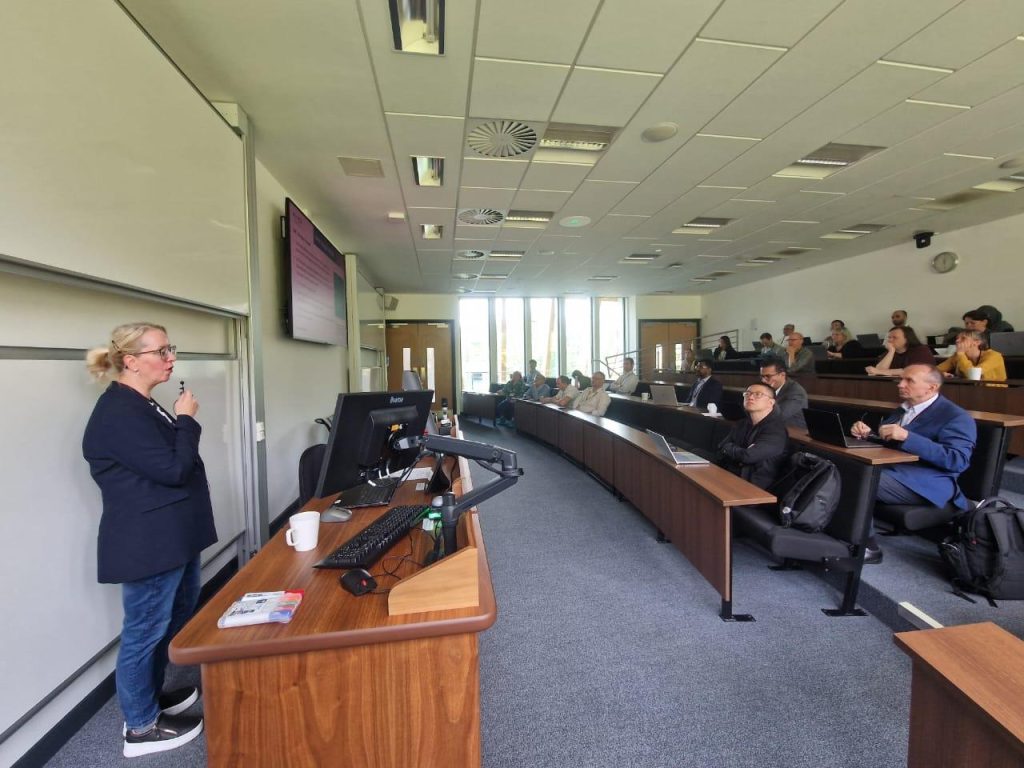
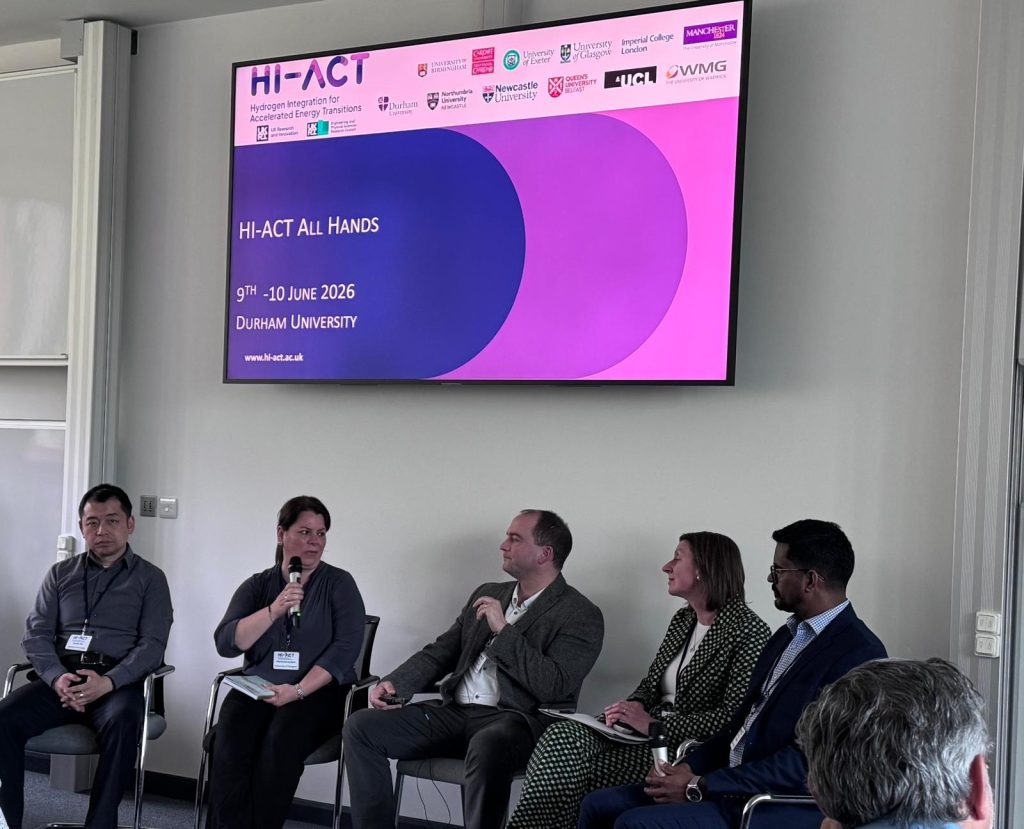
The HI‑ACT community came together in Durham on 9-10 June for our All‑Hands Meeting, two days filled with insight, connection, and shared ambition for the future of hydrogen research in the UK. Hosted at Durham University Business School, the event brought colleagues from across the Hub and beyond to reflect on progress, exchange ideas, and strengthen partnerships across our growing network.
Day 1: Setting the Scene and Sharing Progress
The meeting opened with a welcome and programme update from Director Sara Walker, setting a positive tone for the discussions ahead. We were pleased to hear a keynote from Dr Emma Guthrie (Hydrogen Energy Association), who shared insights from The State of the Hydrogen Nation report a timely overview of the sector’s direction and opportunities.
A lively panel discussion followed, featuring Emma Guthrie, Sube Singh, Dawei Wu, Merlinda Andoni, and chaired by David Flynn. The conversation explored the challenges and momentum across the hydrogen landscape, sparking thoughtful contributions from the room.
The afternoon focused on interactive work package spotlights, with sessions led by Yusuf Nadabo Chanchangi, Paul Dodds, Jana Fakhreddine, Shuai Yao, Clara Crivellaro, and Adam Parnaby. These workshops gave colleagues the chance to dive deeper into current research, share emerging findings, and identify opportunities for collaboration.
We closed Day 1 with an update from Meysam Qadrdan, who presented the latest developments from the RESP project, a valuable look at the progress being made across this important area of work.
With Durham providing a beautiful backdrop, the first day offered a welcome opportunity to reconnect and look ahead to the conversations planned for Day 2.
Day 2: Strengthening Partnerships and Looking to the Future
Day 2 began with another warm welcome from Sara Walker, who introduced a programme centred on partnership, progress, and the evolving hydrogen research landscape.
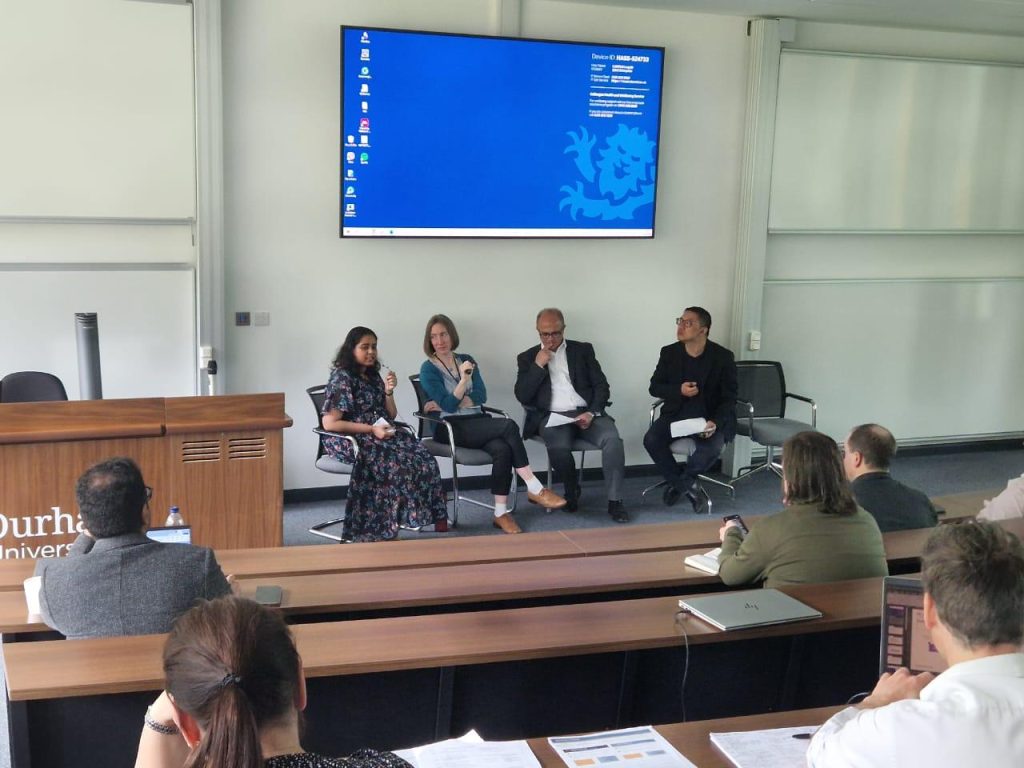
We were delighted to hear from Professor Rachael Rothman, who provided an introduction to UK‑HyRES, followed by Sibimol Luke sharing updates on ECR activity. Their talks set the stage for a rich panel discussion on collaboration between HI‑ACT and UK‑HyRES, featuring Rachael Rothman, Sibimol Luke, Yiji, and Adib. The session highlighted the strong alignment between the two hubs and the shared opportunities ahead.
The morning continued with two insightful briefings: Paul Dodds explored recent UK policy developments and their implications for hydrogen research. David Flynn and David Pollock discussed industry engagement and strategies for securing leverage across the sector. These sessions underscored both the momentum HI-ACT has built and the potential for deeper engagement with partners across academia, industry and policy.
The event concluded with our Celebrating Success session – a moment to recognise the outstanding achievements across the Hub and the people driving them forward.
A Standout Event for the HI‑ACT Community
Across both days the discussions, workshops, and shared reflections demonstrated the strength of our community and the value of bringing people together to shape the future of hydrogen research.
A heartfelt thank you to everyone who joined us, presented, facilitated, and contributed to such a productive and inspiring two days. We leave Durham excited for the work ahead.

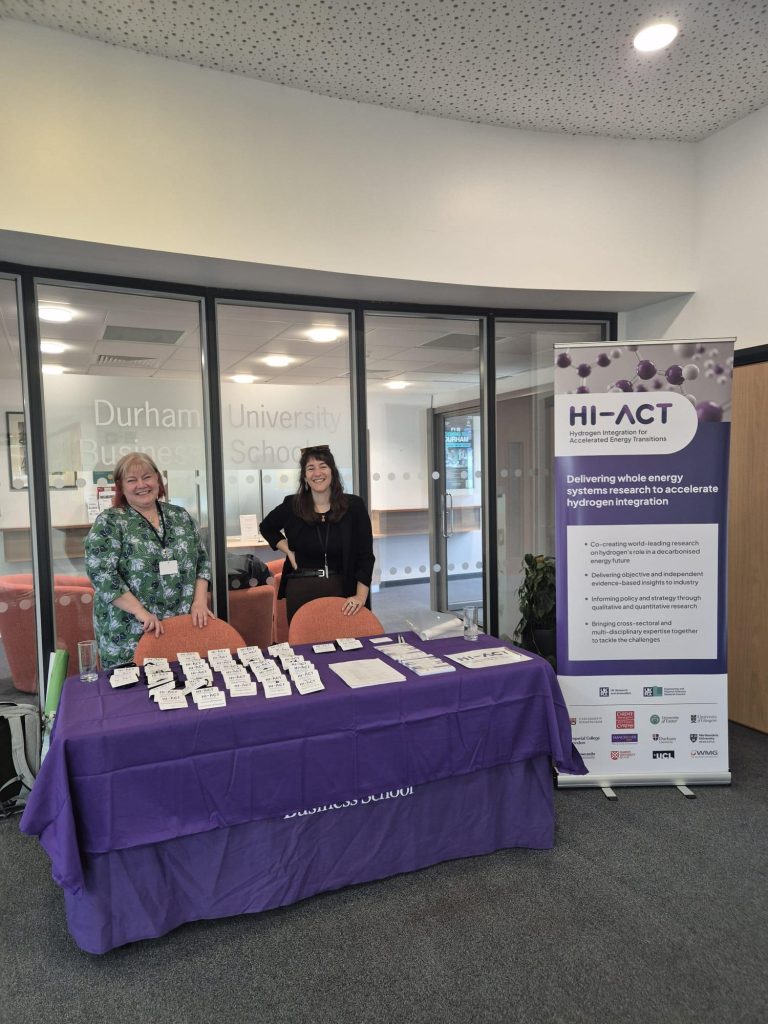
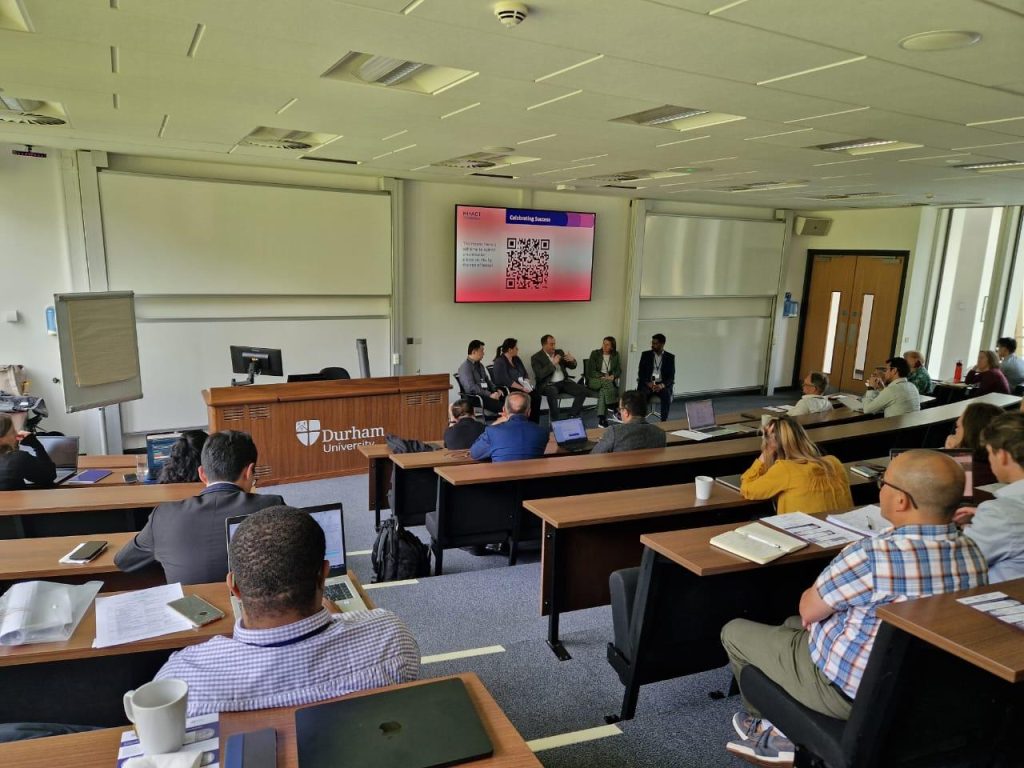
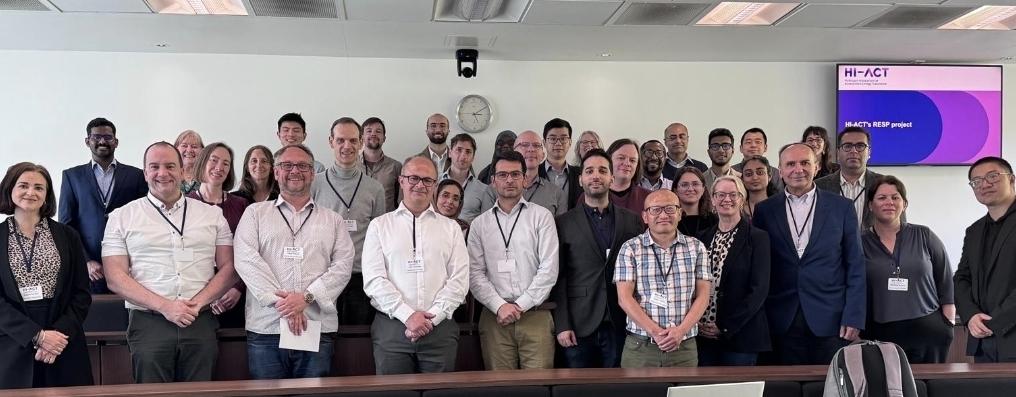



HI‑ACT had a highly successful presence at All‑Energy 2026 in Glasgow recently, joining partners, industry leaders and colleagues from across the clean energy sector to showcase our whole‑systems hydrogen research.
Throughout the day, the HI‑ACT team engaged with delegates exploring the future of the UK’s energy transition. Our dedicated HI‑ACT spotlight session drew strong interest, with researchers sharing insights, discussing emerging findings and connecting with organisations keen to collaborate on hydrogen integration across the energy system.
The event provided an excellent platform to strengthen partnerships, highlight the breadth of HI‑ACT’s research programme and contribute to national conversations on accelerating progress towards net zero.
We extend our thanks to everyone who attended the session, visited us during the event and helped make All‑Energy 2026 such a productive and energising day for the programme.
HI‑ACT recently joined colleagues in Sheffield for a jointly hosted Nuclear Enabled Hydrogen Workshop, delivered in partnership with UK‑HyRES: Hub for Research Challenges in Hydrogen and Alternative Liquid Fuels.
The workshop brought together leading voices from academia, industry, and regulatory bodies to engage in open, constructive discussion around one of the sector’s most complex challenges: how nuclear‑enabled hydrogen and alternative liquid fuels can be deployed at scale, and the barriers that must be addressed to make this possible.
Throughout the day, participants explored the technical, regulatory, and commercial considerations shaping this emerging area, alongside the opportunities that arise from coordinated, whole‑systems thinking.
For HI‑ACT, the workshop marked an important step in deepening cross‑programme collaboration and strengthening the evidence base needed to accelerate clean energy transitions.
We extend our thanks to everyone who contributed their insight and expertise. Further outcomes from the workshop will be shared as this work continues to progress.
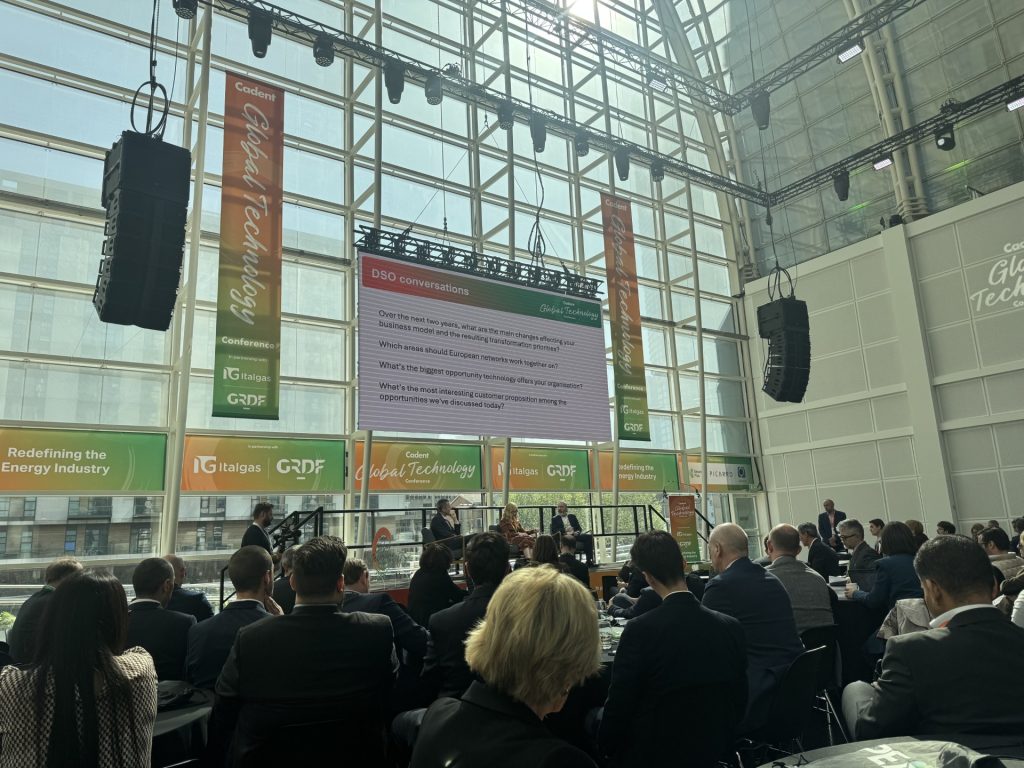
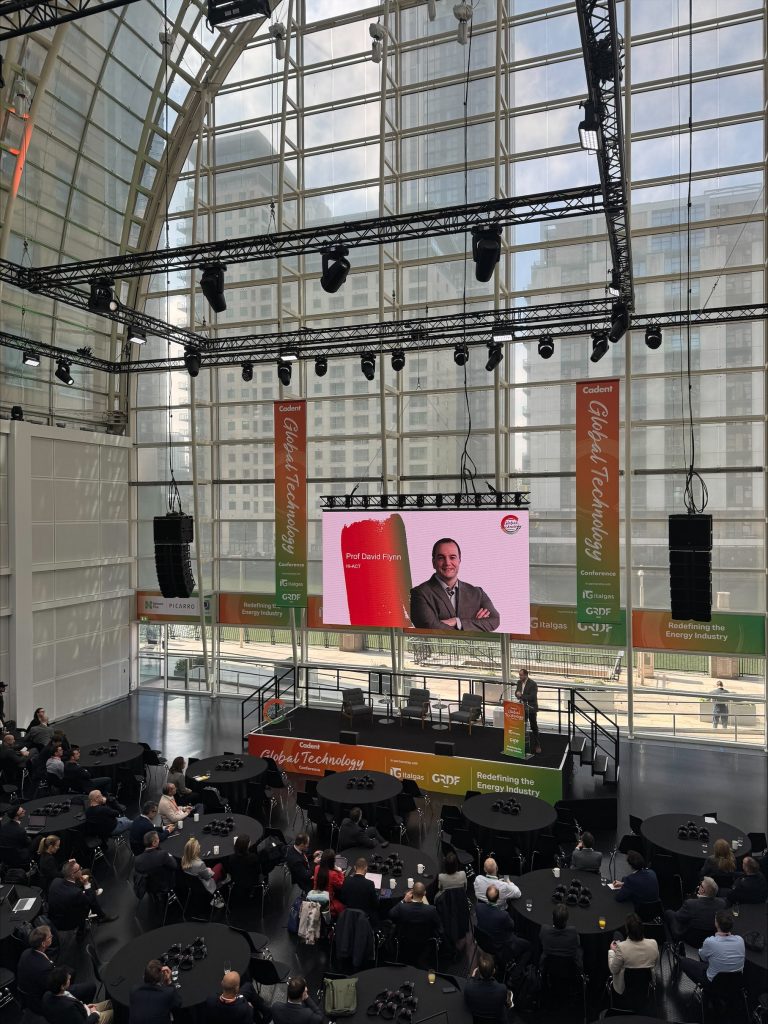
HI‑ACT was pleased to take part in the Cadent Global Technology Conference in London this week, joining industry and academic leaders for two days of discussion on the future of clean energy innovation. As an event sponsor, the Hub played an active role in the programme, contributing insights on how whole‑systems thinking can support the UK’s transition to a hydrogen‑enabled energy system.
Representing HI‑ACT, Professor David Flynn delivered a session exploring our whole‑systems approach to hydrogen integration. He outlined how the Hub rationalises energy system options and demonstrated our methodology through a practical, real‑world example. The session offered a clear view of how HI‑ACT’s research is helping shape decision‑making across the sector and showcased the collaborative work taking place across the programme.
The conference brought together colleagues from across industry and academia, creating a valuable space to exchange ideas, strengthen partnerships, and ensure HI‑ACT remains visible in key national and international conversations on hydrogen and energy systems.
The HI‑ACT Professional Services team came together on 13 April for a focused and highly productive Away Day, held in the King George VI Building at Newcastle University. The session was designed to support two core priorities for the programme: enhancing the visibility and accessibility of HI‑ACT’s research outputs, and reviewing the overarching Key Performance Indicators (KPIs) that guide progress across the project.
A major focus of the day was a comprehensive review of the HI‑ACT website. The team examined how effectively the site showcases research findings and how easy it is for stakeholders – including funders, policy makers, partners, industry, and the wider research community to locate and engage with HI‑ACT’s outputs. This work will help ensure that dissemination is clear, intuitive, and aligned with the needs of those who rely on HI‑ACT’s evidence and insights.
Alongside the website review, the team revisited the full set of HI‑ACT Key Performance Indicators, considering both the programme‑wide measures and those specific to Professional Services. This provided an opportunity to reflect on progress to date and refine what meaningful, achievable indicators should look like for the remainder of the project.
It was great to have Abbie Banner, Sophia Forster, Dr Claire Brewis, Sian Allister, and Natalia Pynirtzi together in person, each contributing to a constructive and forward‑looking discussion.
With clear actions now in place, the team heads into a busy and purposeful period as we continue strengthening HI‑ACT’s digital presence and performance framework.
Celebrating Innovation, Collaboration, and Global Impact
HI-ACT is delighted to announce the successful projects awarded through Call 2 of both the New and Expanding Areas Flex Fund and the Global Impact Flex Fund. These awards recognise outstanding research leadership, bold ideas, and collaborative ambition across the hydrogen and net-zero energy landscape. Congratulations to all successful applicants.
New and Expanding Areas Flex Fund
This fund supports researchers and industry partners to co-create cutting‑edge research exploring the role of hydrogen in local and regional net‑zero energy transitions.
A significant portion of the fund is dedicated to Early Career Researcher (ECR) leadership, and we are proud that three of the four awarded projects are led by ECRs.
Applications for this call were heavily oversubscribed, reflecting the strength and creativity of the UK hydrogen research community. Competition was exceptionally high.
Awarded Projects
• Dr Saeed Harati (ECR), University of Birmingham H2 PlaNet: Hydrogen and Hydrology Planning for Net Zero Energy Transitions
• Dr Shadab Alam (ECR), NZIIC, Teesside University Nuclear Enabled Hydrogen and Direct Air Capture for Sustainable Aviation Fuel: A TEA LCA Assessment
• Dr Weiqi Hua (ECR), University of Birmingham WHISPER: Whole System Hydrogen Integration in Supporting Place‑Based Equitable Net Zero Transition
• Dr Alok Kumar, Brunel University London Contribution of Hydrogen to Energy Transition of Urban Industrial Clusters (CHETUIC)
Global Impact Flex Fund
The Global Impact Flex Fund enables international visits, researcher exchanges, and short-term collaborations that strengthen HI-ACT’s global visibility and amplify the international reach of our research.
Awarded Projects
• Dr Shahab Dehghan, Newcastle University Resilient Integration of Green Hydrogen into Net Zero Energy Systems under Transient Security Limits: A UK–Australia Collaboration (RIGHT UKAU)
• Dr Sube Singh, WMG, University of Warwick Global Collaboration for Hydrogen Supply Chain Readiness, Resilience, and System Integration
• Dr Amir Jahanbakhsh, Heriot-Watt University Challenges with Hydrogen Storage in Underground Porous Media: Microbial Consumption and Residual Trappings


We are pleased to highlight the contribution of Prof Sara Walker, HI‑ACT Director, to recent media coverage of a landmark £50 million green hydrogen project planned for Milford Haven. The development is one of the first to progress through the UK Government’s Hydrogen Allocation Round (HAR) and is expected to begin construction later this year.
The project represents a significant step forward for the UK’s hydrogen economy, aiming to produce 2,000 tonnes of low‑carbon hydrogen annually and deliver more than 15,000 tonnes of CO₂e savings each year. Powered primarily by UK wind energy, the facility will support both regional decarbonisation and national energy security.
Speaking to the press, Prof Walker emphasised the critical role of green hydrogen in sectors where electrification alone cannot meet industrial heat requirements:
“By making hydrogen from green electricity, we’re using cleaner hydrogen, and supporting industries like steel, ceramics and glass to transition away from natural gas. These things need really high temperatures, and if you did it through only electricity it would be quite difficult to get to the temperatures that you need.”
Project Overview
£50 million investment backed through HAR
- 60 construction jobs and 10 permanent roles
- 2,000 tonnes of low‑carbon hydrogen produced annually
- Over 15,000 tonnes CO₂e savings projected each year
- Powered by UK renewables, primarily wind
This project demonstrates the growing momentum behind hydrogen as a key enabler of the UK’s net‑zero transition — and we are proud to see HI‑ACT expertise informing the national conversation.
Read the full article here: Construction on Milford Haven hydrogen production plant to begin – BBC News
HI‑ACT is delighted to share that Natalia Zografou‑Barredo, one of our Postdoctoral Research Associates and a former HI‑ACT secondee, has been selected as a finalist in the Engineering category at STEM for Britain 2026.
STEM for Britain is a long‑established scientific poster competition and exhibition held annually in the Houses of Parliament. Organised by the Parliamentary & Scientific Committee and chaired by George Freeman FRSA MP, the event has, since 1997, provided parliamentarians with a unique opportunity to engage directly with outstanding research being carried out by early‑career scientists, engineers and mathematicians across the UK.
The competition recognises excellence in communicating complex, high‑level research to a lay audience. Prizes are awarded across five disciplines, Biological and Biomedical Sciences, Chemistry, Engineering, Mathematical Sciences and Physics with the prestigious Westminster Medal presented to the overall winner in memory of Dr Eric Wharton, who played a pivotal role in establishing the event.
Natalia will be presenting a poster based on the research she undertook during her HI‑ACT secondment, showcasing this work in the House of Commons on 17 March 2026.
HI‑ACT is incredibly proud to see Natalia’s work recognised on a national stage and congratulates her on this significant achievement.

On Thursday 11 December 2025, Karen Henwood, Gareth Thomas and Emily Sunman, were invited to present HI‑ACT research at a research celebration event held at Main College, Cardiff University.
This invitation followed the continued success of HI‑ACT’s public engagement programme. After an impactful first public workshop in Milford Haven on 4 March 2025, a second public engagement research workshop was delivered in Port Talbot on 4 December 2025.
Together, these events are generating valuable place‑based insights while contributing to a growing body of social science research that explores how both experts and local communities understand, envision, and respond to the development of hydrogen megaprojects.
This work is helping to build a richer, more inclusive understanding of the social dimensions of hydrogen transitions in South Wales and beyond.
